Service area
House Painters in the Glebe
Century brick homes with wood trim, deep porches and plaster walls that move with the seasons.
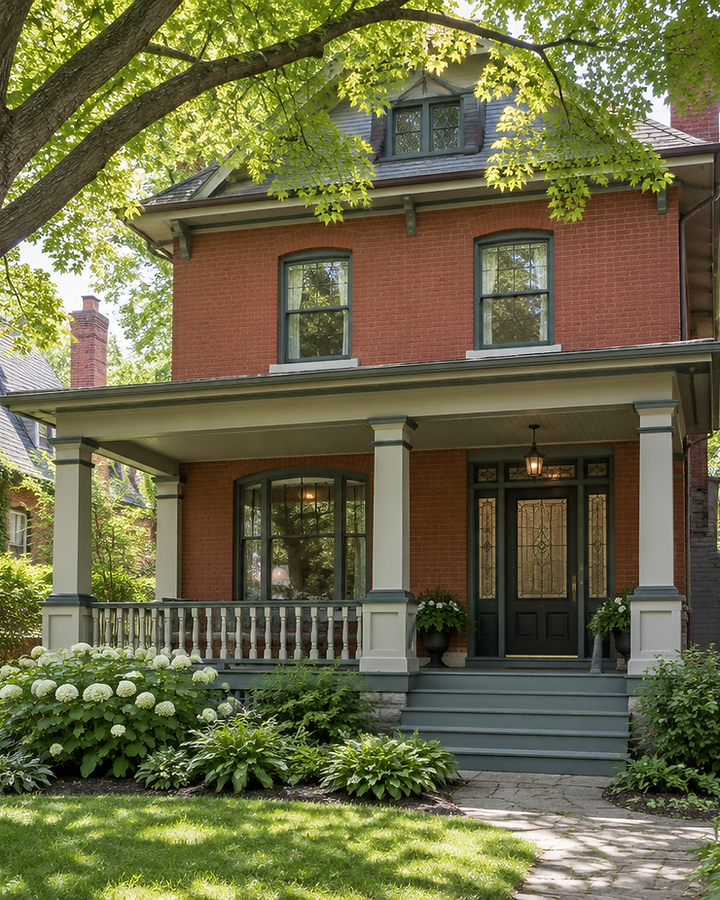
The Glebe was built out before the First World War and then added to for decades after, which is why the streets hold such a variety of detail. Red brick is the dominant material, with stone sills, wooden cornices, bay windows and deep front porches that were designed for sitting on. Behind the facades the rooms are tall, with plaster walls, wide baseboards and windows that let in a great deal of light.
All of that detail is a pleasure and a responsibility. The woodwork on a Glebe porch is exposed on three sides and takes the full weather. The brick needs little maintenance and should usually be left alone. The plaster inside cracks and gets patched, and the light from those tall windows reveals every imperfection in the surface beneath the paint.
Also serving
Centretown, Westboro and Rockcliffe Park are the neighbouring areas we cover.
02 / Surfaces
Brick that should be left, wood that must be kept.
The brick on a Glebe house is usually best left unpainted. It dries through its face, and a coating that traps moisture will cause the surface to spall over time. Where brick has already been painted by a previous owner, the condition of that coating decides what is possible next, and removing paint from brick is a different and slower job than repainting it.
The wood is where the exterior work lives: porch floors, steps, columns, railings, cornices, window heads and sills. That wood has often been painted many times, and the film cracks along the grain as it ages. Taking it back to a firm edge, filling where the profile has been lost and priming bare areas is the difference between a porch that lasts and one that needs attention again in two years.
Inside, plaster takes paint beautifully but needs repair that is feathered wider than drywall requires. Wide baseboards and casings need sanding and a hard finish, because they are touched constantly. Deep window reveals collect dust and are worth cleaning properly before any paint goes on.
03 / Access
Narrow streets, porches and street trees.
Glebe streets are narrow and lined with parked cars and mature trees. Materials are carried in, equipment is kept to what the elevation needs, and the work is planned so the street is not occupied longer than necessary. Porches close to the sidewalk need a tidy site at the end of each day.
The trees provide shade that protects the paint but slows the work, since shaded elevations stay damp into the morning. Where a branch obstructs access, that is discussed before the day rather than worked around.
04 / The season
A longer preparation, a shorter window.
Exterior work on these houses takes longer per elevation than on modern housing because there is so much trim. The window is the same as the rest of Ottawa, from late spring into early autumn within the product limits, so the sequence has to be realistic. Starting with the front elevation and the porch usually makes sense, since that is what is seen and used most.
Interior work suits the winter particularly well here. Tall rooms and plaster walls are pleasant to work in when the house is closed up, and the dry indoor air helps waterborne finishes cure.
Painting questions in the Glebe.
Services in the Glebe
Services
Request a consultation.
Tell us the age of the house and whether the work is inside, outside or both. Porch and trim repairs are worth describing in detail.
Request a consultation
Tell us a little about the space and the work. We reply by email with next steps and a time to walk through the project.