Service
Exterior Painting in Ottawa
Siding, brick and masonry where suitable, trim, soffits, doors and porches, finished within the season the products allow.

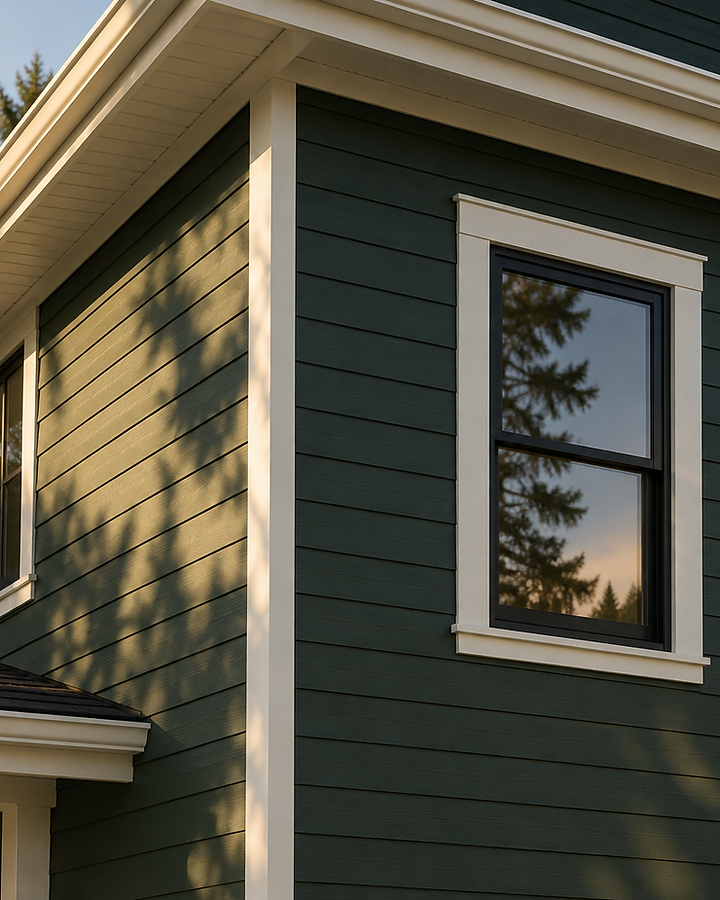
An exterior repaint protects the building as much as it changes how it looks. The surfaces that take the most weather are the ones that matter most: south and west elevations, window heads and sills, the bottom courses of siding, porch floors and the foot of every door.
We paint wood and fibre cement siding, stucco, trim and fascia, soffits, window and door casings, exterior doors, garage doors, porches, railings and the accessible parts of masonry. Brick and stone are assessed individually: where the masonry has never been coated and is sound, leaving it alone is often the right recommendation.
- Wood and fibre cement siding
- Trim, fascia and soffits
- Window and door casings
- Exterior and garage doors
- Porches, railings and posts
- Masonry, where a coating suits
Season
Late spring into early autumn, inside the product's temperature and humidity range.
02 / Preparation
Washing, scraping and finding the water.
Exterior preparation begins with cleaning. Siding holds dust, pollen, and the grey film that grows on the shaded side of a house. Washing removes it and lets us see the surface properly. The method is chosen for the material: gentle on older wood and on masonry that could be driven, firmer on hard siding that has years of grime.
Then we look for failure. Loose and flaking paint is scraped back to a firm edge and sanded so the transition is smooth. Areas of bare wood are primed. Open joints at window heads, corner boards and trim ends are repaired and caulked, because those are the places water gets in and the reason paint peels in the first place. Where wood has gone soft, we say so before coating it.
Glossy surfaces are dulled so the new film can key. Chalky, oxidised paint is washed and often primed, since a powdery surface will not hold a topcoat no matter how good the paint is. Everything that will not be painted is masked, and landscaping near the work is covered.
Exterior paint fails from the back of the film, not the front. Finding the water matters more than the colour.
03 / Products and sheens
Systems chosen for the exposure.
Exterior work is usually a system rather than a single product: a primer suited to the substrate, then a topcoat with the right flexibility and resistance for how much sun and weather the elevation receives. Acrylic exterior finishes are the common choice because they stay flexible and allow the wood to move. Where a harder film is wanted on trim, an exterior waterborne enamel gives a smoother, more durable surface.
Sheen on an exterior matters less for looks than for durability. Lower sheens hide surface irregularity on older siding. Satin and semi gloss are easier to clean and shed water more readily, which is why they are usual on trim and doors. Very dark colours on south facing siding will run hotter and move more, and on vinyl they may not be advisable at all.
On masonry, the coating has to let the wall dry. A breathable masonry coating, usually mineral or elastomeric depending on the condition, is chosen only after the wall has been assessed for moisture and for previous coatings that may be trapping water.
04 / Ottawa seasons
Freeze and thaw decides the exterior calendar.
Ottawa's exterior season is short and its edges are soft. Coatings need air and surface temperatures within the range printed on the product data sheet, and they need enough time to dry before dew or rain. A warm afternoon in late September followed by a cold night is a risk, because moisture forms on a film that has not fully cured.
Freeze and thaw does the rest. Water that gets behind a coating expands overnight and pushes the film off the surface, which is why the small repairs matter so much here. A failed caulk line at a window head in November is a peeled patch of siding by April. The best exterior work in this city is the work that closes those openings properly.
Practically, we start later in the morning once surfaces have dried, and we would rather split a job around a cold snap than rush a coat that will not cure. Summer afternoons can be too hot for direct sun on a dark surface, so the order of elevations follows the sun.
05 / Scheduling
When to book exterior work.
Exterior schedules fill first, often before the snow has gone. If your house needs work this year, get in touch early in the year and we can plan around the weather rather than against it. Spring is also when damage from the winter becomes visible, so a walkthrough in April or May usually finds the repairs that should be included.
If a coating is already failing, waiting a season is rarely neutral. Water that is getting behind paint is also getting into wood, and the repair grows. Tell us what you are seeing and we will tell you whether it can wait.
Exterior painting questions.
Request a consultation.
Tell us the material, the age of the house and what you have noticed. Cost depends on the project.
Request a consultation
Tell us a little about the space and the work. We reply by email with next steps and a time to walk through the project.