Service
Interior Painting in Ottawa
Walls, ceilings, trim, doors and stairwells, prepared properly so the finish reads evenly in daylight.
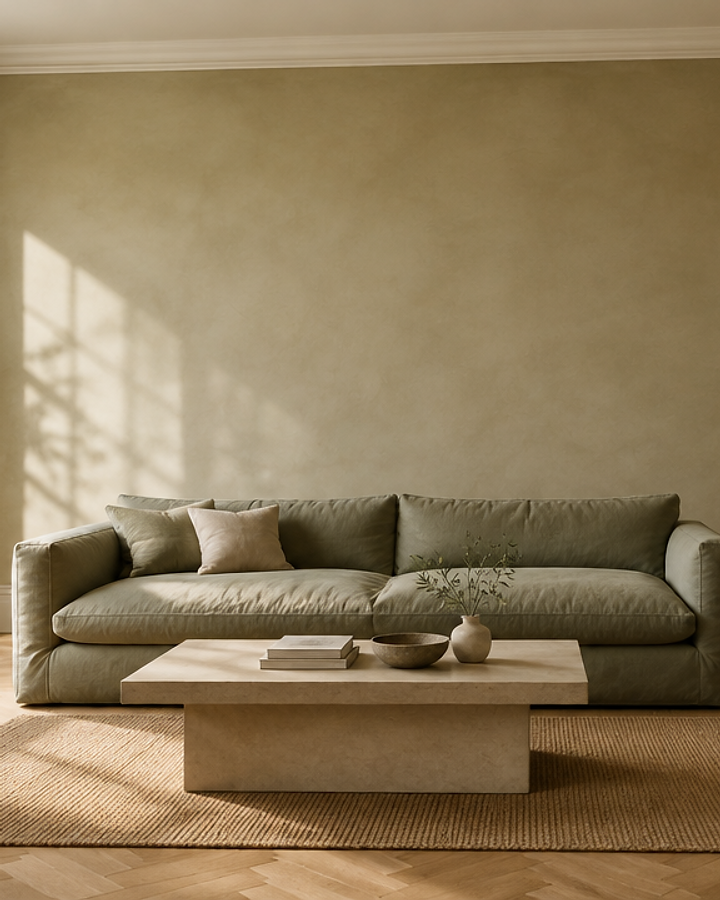
Interior painting covers the surfaces you live with every day. That usually means walls and ceilings, the trim that frames them, doors and their casings, and the parts of a staircase that get seen and touched: the stringer, the risers, the handrail and the spindles. It also means the repairs those surfaces need first, because interior rooms are inspected at close range and in raking light from a window.
We paint occupied houses and empty ones, single rooms and whole floors. The sequence changes with the space. A bedroom can be finished in a run of days. A stairwell needs access planning. An open plan main floor needs the ceilings completed before the walls so that cut lines stay clean.
- Walls and ceilings
- Baseboards and casings
- Interior doors and jambs
- Crown moulding and picture rail
- Stairwells, risers and handrails
- Drywall and plaster repair
Suits
Whole homes, single rooms, hallways, stairwells, basements and rental turnovers.
02 / Preparation
Patching, sanding and priming, in that order.
Interior preparation starts with an honest look at the walls. Settling cracks above door frames, nail pops in drywall, corners that have been knocked, and the ridges left by earlier repairs all need to be dealt with before paint goes on. Each is filled, sanded flush and checked again under a light held at a low angle to the wall.
Where a wall has been patched repeatedly or the surface is uneven, a skim coat brings it back to a single plane. On older plaster, cracks are opened slightly so the filler can key into them rather than sitting on the surface and opening again with the next seasonal movement.
Trim is sanded to remove raised grain and to dull any factory finish enough for a new coat to grip. Gaps where trim meets wall, and where casings meet jambs, are caulked with a paintable bead that stays flexible. Floors, furniture and hardware are protected before any of this begins, and dust is removed with a vacuum before the first coat is opened.
An interior room is inspected at arm's length, which is why the preparation has to be better than the paint.
03 / Products and sheens
A finish chosen for how the room is used.
Most interior walls and ceilings take a waterborne acrylic finish. It has low odour, dries quickly and remains flexible as the building moves. For trim, doors and any surface that is handled constantly, a harder waterborne enamel or an alkyd gives a tighter film and a smoother touch.
Sheen is where most of the practical decisions are made. Ceilings are usually flat or matte, which absorbs light and hides the unevenness that ceilings tend to have. Main walls often take matte or eggshell depending on traffic. Hallways, kitchens, bathrooms, trim and doors take satin or semi gloss, because those surfaces are washed and touched.
Primers are chosen for the surface rather than the colour. Bare drywall and fresh compound take a drywall primer that equalises absorption. Stained ceilings and water marks take a stain blocking primer. Previously painted surfaces in good condition may need nothing more than cleaning and a light sand.
04 / Ottawa notes
Interior work runs all year, and the house changes with the season.
Interior painting does not depend on the weather, which is why winter is a good time for rooms that are hard to empty in summer. It does depend on the conditions inside the house. In February the air is dry and a coat skins over faster than it would in June, which affects how the next coat is applied. In a humid July, drying takes longer and we allow for it.
Older Ottawa houses bring their own considerations. Plaster walls in the Glebe and Centretown hold a finish beautifully but crack with the seasonal movement of the structure. Postwar houses in Nepean often have drywall with taped joints that have started to telegraph through the paint. Both are preparation problems rather than painting problems, and both are handled before the first coat.
05 / Scheduling
When to book interior work.
Spring is the busiest season for interior painting, and autumn follows as people prepare for the holidays. If you have a specific date in mind, particularly for a whole house or a floor, earlier is better. Rooms that can be done in a short window are easier to fit around other work.
If the house is occupied, the daily routine matters as much as the dates. Tell us when the household is out, when children are home, and whether a pet needs to be kept away from a wet floor. We plan the order of rooms so that at least one usable route through the house is always open.
Interior painting questions.
Request a consultation.
Tell us which rooms and surfaces are involved. Cost depends on the project, so we quote after seeing the walls.
Request a consultation
Tell us a little about the space and the work. We reply by email with next steps and a time to walk through the project.